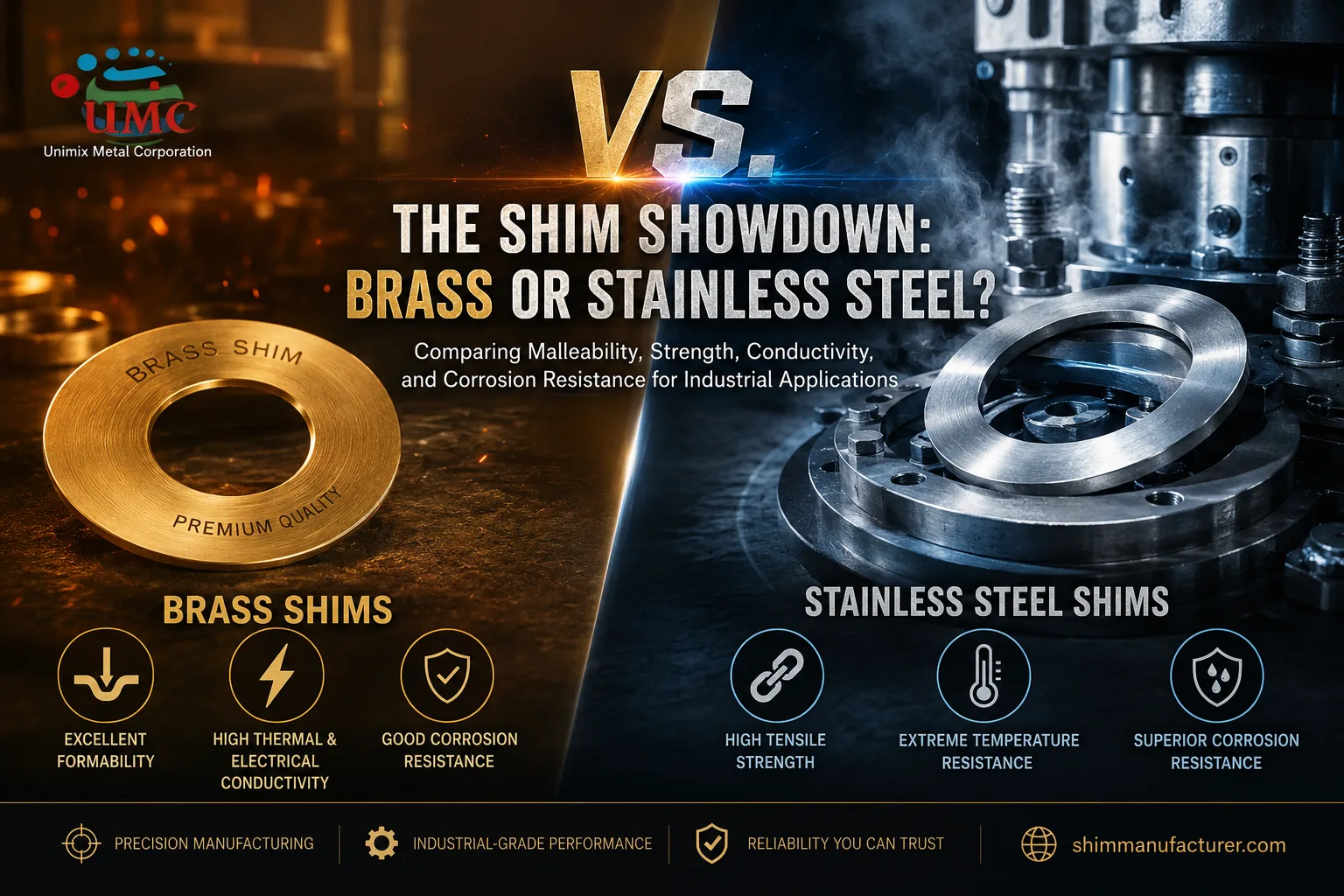
When precision alignment is critical for your machinery, choosing the right shim thickness is only half the battle. Selecting the correct material is just as vital to ensuring the longevity, safety, and efficiency of your equipment.
Two of the most popular materials in the industrial sector are brass and stainless steel. While both offer unique advantages, using the wrong material for a specific environment can lead to premature wear, corrosion, or total equipment failure.
Here is a comprehensive breakdown of brass vs. stainless steel shims to help you make the right choice for your next engineering project.
The Case for Brass Shims
Brass is a metal alloy made primarily of copper and zinc. It is highly valued in industries where friction and sparks are a major concern.
Key Advantages:
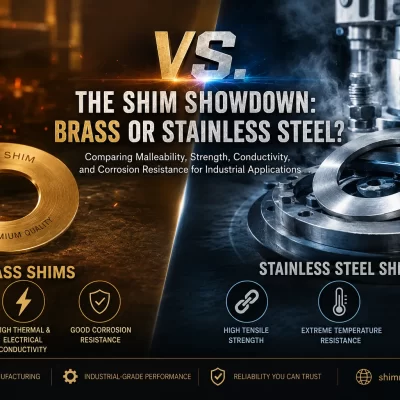
High Malleability: Brass is softer than steel, making it incredibly easy to stamp, cut, and mold into custom shapes without cracking.
Non-Sparking Properties: Because it does not spark when struck, brass is the go-to choice for explosive environments, such as oil and gas refineries or chemical processing plants.
Excellent Conductivity: Brass offers superior thermal and electrical conductivity, making it ideal for electrical panels and circuitry.
Corrosion Resistance: It performs exceptionally well in water and marine environments, resisting rust effectively.
Best Applications for Brass: Electrical engineering, plumbing fixtures, explosive environments, and low-stress mechanical alignments.
The Case for Stainless Steel Shims
Stainless steel is an iron alloy that contains at least 10.5% chromium, which provides its famous resistance to rust and staining. In heavy-duty industrial applications, stainless steel is often the undisputed champion.
Key Advantages:
Unmatched Tensile Strength: Stainless steel can withstand immense pressure and heavy load-bearing applications without deforming.
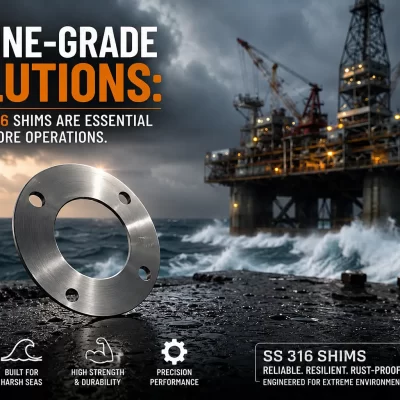
Extreme Temperature Resistance: Grades like SS 347 and SS 316 can maintain their structural integrity in extreme heat, making them perfect for exhausts, turbines, and aerospace applications.
Superior Durability: It outlasts brass in highly abrasive and physically demanding environments, requiring fewer replacements and reducing maintenance downtime.
Chemical Resistance: Stainless steel holds up incredibly well against harsh industrial chemicals, acids, and alkalis.
Best Applications for Stainless Steel: Heavy machinery alignment, automotive manufacturing, aerospace engineering, high-temperature environments, and chemical processing.
Feature Comparison: Brass vs. Stainless Steel
| Feature | Brass Shims | Stainless Steel Shims |
| Tensile Strength | Low to Moderate | Extremely High |
| Malleability | Excellent (Easy to cut/form) | Moderate (Requires industrial tooling) |
| Corrosion Resistance | Good (Water/Marine) | Excellent (Chemicals, Acids, Weather) |
| Electrical/Thermal Conductivity | High | Low |
| Non-Sparking | Yes | No |
| Temperature Tolerance | Moderate | Extreme (Depending on the grade) |
How to Make the Final Decision
When choosing between the two, ask yourself these three questions:
What is the operating environment? If the shim will be exposed to explosive gases, brass is required for safety. If it will be exposed to extreme heat or caustic chemicals, stainless steel is the only option.
How much weight or pressure will the shim bear? For heavy machinery and tight tolerances under extreme loads, stainless steel provides the necessary rigidity.
Do you need conductivity? If the shim needs to conduct electricity or heat efficiently, brass is the superior material.
Need Premium Industrial Shims?
At Shimmanufacturer.com, we specialize in high-precision, industrial-grade stainless steel shims designed to meet exact tolerances. Whether you need standard thicknesses or custom fabrications, our materials are rigorously tested to ensure maximum performance and reliability.
Contact our team today to request a quote or to get expert advice on the best material grades for your specific application.